Source Waterproof Luxury Laptop Sleeve for Business Travel
Compare 30 verified options for a waterproof luxury laptop sleeve designed for professionals. Buyers can evaluate features like shockproof protection, material quality, and customization to find the ideal case for daily commuting, business meetings, and travel; compare the available evidence and request quotations based on your requirements.
Key considerations
Products List




Comprehensive Sourcing Guide
Waterproof Luxury Laptop Sleeve Sourcing Guide
Waterproof luxury laptop sleeves occupy a distinctive position in the laptop bag category: they combine protective performance with a refined business aesthetic suitable for corporate gifting, retail programs, and branded merchandise. Buyers sourcing this product must evaluate both functional claims—water resistance, shock absorption, and fit for specific screen sizes—and the premium presentation that justifies a higher price point than commodity sleeves.
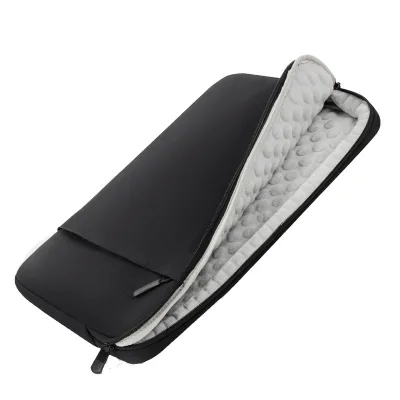
The listings observed in this category span sleeve-style cases for 11.6" through 15.6" laptops, with materials ranging from Oxford and neoprene to felt, and features including shockproof construction, side pockets, and detachable shoulder straps on some models. Because "waterproof" and "luxury" are not standardized terms, this guide explains how to convert listing claims into verifiable specifications, structure commercial terms, and qualify suppliers so that the product you receive matches the positioning you intend to sell.
Product Scope and Observed Listing Signals
Observed listings in this category cluster around sleeve-type laptop bags with unisex, business, or simplicity styling, sized for screens from 11.6" up to 15.6", with one listing specifying a 15" fit. Materials across listings include Oxford, neoprene, and felt outside with polyester inside linings. Colors shown include black and grey. Feature sets vary meaningfully: some listings advertise waterproof and shockproof protection, while one felt model is explicitly marked "Not Waterproof"—a useful reminder that the keyword should not be assumed to apply to every sleeve on a results page.
Weight is specified at 300g on one model, and packing formats range from individual OPP bags to cartons, with one listing noting 1 PC/polybag and 100 pieces per carton. Model identifiers such as LB01, LB-07, LB-08, LB-15, LB-16, CI-1017, PT36, and DNB74 suggest a mix of manufacturer lines rather than a single product family. Origins listed include Guangdong, Dongguan City, and Xiamen, all in China, reflecting the category's established manufacturing base. Customization is explicitly listed as available, supporting branded and tailored programs.
Technical Specifications to Verify
Begin with dimensional fit, since sleeve returns are dominated by size mismatches. Confirm the exact laptop diagonal each model accommodates—listings reference 11.6", 12", 13.3", 14", 15", and 15.6"—and request internal dimensions, not just nominal screen size, because bezel thickness and laptop profile vary. One listing provides L29 × W21 × D5 cm as a base specification with customization offered, which illustrates the level of precision you should demand from every candidate supplier.
Next, interrogate the waterproof claim. The listings show genuine variation: Oxford and neoprene constructions are associated with waterproof positioning, while a felt model is explicitly not waterproof. Ask whether "waterproof" means water-resistant fabric, a coated shell, or a sealed zipper system, since these deliver very different protection levels. Also verify shockproof construction details—padding thickness, corner reinforcement, and closure type—along with weight (the listed 300g benchmark), shoulder strap detachability where offered, and internal structure such as side pockets or a main compartment only.
Compliance and Safety Documentation
The only certification observed in this category is CE marking, referenced on one listing, and OEM production is noted on another. Do not extrapolate CE status across all models; instead, request the declaration of conformity and supporting test reports for the specific SKU you intend to purchase, and confirm which directives the marking covers for a textile accessory of this type.
Beyond the observed CE reference, ask suppliers to document material safety for components that contact users frequently: fabric composition, dye fastness, coating chemistry, and zipper hardware. Because listing data is thin on compliance, treat documentation requests as a supplier maturity test—established manufacturers respond with organized test files, while weaker ones offer vague assurances. If you plan to sell into regulated retail channels, clarify with your own compliance team which market-specific requirements apply, and obtain written supplier commitments before sample approval rather than after production, when leverage is limited.
Cost Drivers and Commercial Terms
Observed pricing spans $0.50 to $15.50, a wide band that reflects the genuine material and feature differences in this category: felt and basic neoprene sleeves sit at the low end, while multi-layer Oxford constructions with detachable straps, side pockets, and branded detailing command the upper range. Identify which features drive your target price tier and strip out anything your customers will not pay for, since "luxury" positioning must be earned through materials and finishing, not labels.
Observed MOQs range from 1 to 1000 pieces, indicating that sampling and small trial orders are commercially accessible before committing to volume. Confirm whether customized designs, which listings say are available, carry higher MOQs or tooling charges than stock models. Pack formats matter for landed cost: individual OPP bags versus bulk cartons affect both protection in transit and retail readiness. Carton dimensions—one listing cites 60 × 40 × 40 cm—directly influence freight efficiency, so request packing specifications early in negotiation.
Supplier Qualification and Quality Control
Geographic concentration in Guangdong, Dongguan, and Xiamen gives buyers plenty of candidates but demands disciplined screening. Prioritize suppliers whose listings demonstrate specification discipline—exact dimensions, stated materials inside and out, declared weight, and honest waterproof status—as this transparency typically extends to production communication. A supplier that markets a felt sleeve as "Not Waterproof" rather than overselling is showing the kind of accuracy you want in order handling too.
Structure quality control around a pre-production sample and a written specification sheet covering materials, dimensions, color (black and grey are the listed references), stitching density, zipper action, and padding. For first orders, conduct pre-shipment inspection focused on the highest-risk failure points: seam integrity, waterproof coating consistency, and fit on the intended laptop sizes. Reorder consistency matters in this category because subtle fabric or padding substitutions are hard to detect on receipt but erode the premium feel that justifies luxury pricing.
Long-Term Procurement Checks
Build annual or per-order reviews into the relationship. Re-verify that production samples still match the approved specification, particularly after supplier changes in fabric mills or lining sources—a common cause of silent quality drift. Track defect rates across shipments, distinguishing cosmetic issues from functional failures such as zipper breakage or water ingress, and share the data with your supplier so corrective actions target root causes rather than symptoms.
Plan product evolution deliberately. Since customization is available across observed listings, use it to refresh colors, add logo treatments, or adjust dimensions for new laptop form factors, keeping your range current without changing suppliers mid-cycle. Maintain a documented second-source qualified on the same specification, even if volumes stay with your primary supplier, to protect against capacity constraints. Finally, keep packing and labeling details—polybag versus carton, carton dimensions, piece counts—written into every purchase order so logistics assumptions never quietly change.
FAQs
What materials are used for waterproof laptop sleeves?
Waterproof laptop sleeves typically utilize durable materials such as Oxford fabric, neoprene, or felt. Oxford provides robust protection against moisture and abrasion, while neoprene offers shock absorption and flexibility. Some designs combine these materials to ensure the device remains dry and secure during transit or daily use.
Can I customize the design of a laptop sleeve?
Yes, customization is widely available for laptop sleeves. Buyers can request specific colors, logos, and internal structures to match brand identity. OEM services allow for tailored dimensions and features, ensuring the final product aligns precisely with corporate requirements or specific aesthetic preferences for professional use.
What sizes are available for laptop sleeves?
Laptop sleeves are manufactured for various screen sizes, including 11.6, 12, 13.3, 14, 15, and 15.6 inches. Selecting the correct size ensures a snug fit that protects the device from impacts. Custom dimensions are also possible to accommodate unique laptop models or specific user needs.
How are laptop sleeves typically packed for shipping?
Laptop sleeves are commonly packed in OPP bags for individual protection and then placed into cartons for bulk shipping. This method ensures the items remain clean and undamaged during transit. Packaging specifications can be adjusted to meet specific logistical requirements or branding needs for wholesale orders.
What features do high-quality laptop sleeves offer?
High-quality laptop sleeves offer shockproof, waterproof, and lightweight features. They often include multi-functional designs with side pockets and detachable straps. These attributes ensure comprehensive protection for devices while maintaining portability and convenience for business travelers and daily commuters who require reliable gear.
Where are these laptop sleeves manufactured?
These laptop sleeves are primarily manufactured in China, with production hubs in Guangdong, Xiamen, and Dongguan. These regions are known for their advanced manufacturing capabilities and supply chain efficiency. Buyers can source products from these locations to benefit from established industrial clusters and reliable production standards.